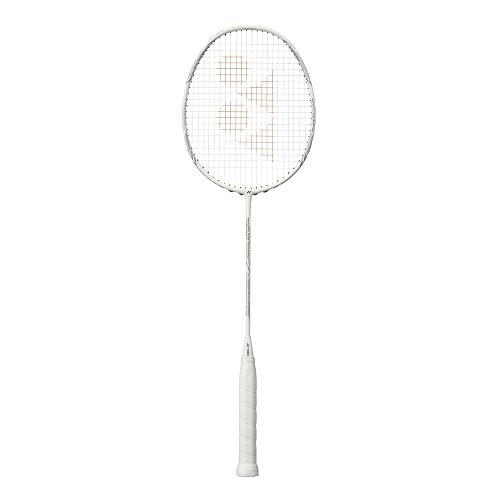
Used the Astrox 100ZZ and started at a slightly lower string tension to get used to it. Says it punishes mishits and rewards a smooth, loose swing that tightens only at impact, and that it takes a few sessions to adjust.
switched from my 88D Pro to save my shoulder and the jump in hand speed is real. drives and flat exchanges at the front are way quicker, and i finally get the racket up in time when someone smashes at my body.
but from the back it just doesn't hit through the shuttle like a heavier frame. my smashes come off quick but they don't drop steep and the other pair picks them up all night. strung at 26 lbs, might try going lower.
decent racket, just the wrong one if you're the guy who lives in the back court
Switched from an Astrox 77 Pro a couple months ago, strung at 26 lbs with BG80. Smashes are the whole reason to own this thing, they come down steep and heavy without me having to force anything. The head weight does catch me out on fast drives in doubles though, and my shoulder is tired by the third game. Off-centre hits get punished, so if your technique is shaky look elsewhere. Worth it if you're an attacker who is fit enough for it.
Picked this up because I'd been playing with a stiff head heavy racket and my shoulder was complaining after every Thursday doubles night. The Arcsaber 7 Play is the opposite. It's light, it swings through quickly, and defending flat drives and fast exchanges at the net is honestly easier than anything I've had before. The sweet spot feels huge, even my sloppy off-centre clears still go back.
What it doesn't do is give me free power. After about 8 months my smashes are clearly softer than my partner's, and when I try to hit harder it feels like the frame just bends instead of snapping. Fine if you're a defensive or all-round doubles player or still learning, probably not what I'd buy again once the technique improves. Three stars from me because it does exactly what it says but I want more bite on the smash.
Bought the Thruster F Claw Ultra and loves it: it finally gives them the power they wanted on backcourt smashes, clears are effortless, and it is nimble with good control at the front.
Tried the Auraspeed 100X Ultra recently and disliked it: the Free Core handle gives very little feedback, and smashes felt far less satisfying than with the Astrox 88D.
A heavy smasher about a year into the game plays the Thruster Ryuga TD strung with BG65. Enjoys the raw smash power, but the very head-heavy balance and demanding shaft punish late shots, defence against fast drives and reactions at the net.
An upper-beginner singles and lower-intermediate doubles player who owns the Thruster F Claw Ultra finds it not demanding: stiff but whippy, with a forgiving sweet spot thanks to the larger head. Power comes easily from the head weight, though it gets a little tiring and they feel they only get about 80% of their power on clean hits.
Compared with the original Astrox 77, finds the 77 Pro slightly more head-heavy and stiffer, with more punch from the back court while staying quick for flicks and pushes at the net. Also liked having it in G6 for more control at the net.
A beginner-to-intermediate doubles player has used the Astrox 88 Play since taking up the game a year ago and loves it: versatile, with plenty of power when attacking. Now looking for something similar with a bit more control.
Felt stiffer and heavier in the head than even the original Ryuga. His 4U sample swung heavier than his 3U sample, and he found the racket unforgiving when his timing was off.
Felt heavier in the head than the standard Ryuga II and gave more raw power without making it easier to swing. Contact was softer than on the original Ryuga, and he suggested trying the 4U if the extra weight felt demanding.
4U Auraspeed 100X Ultra owner: faster drives and better defence than the 88S Game and light, even balance, but vibration, poor stability, clears lacking power and a smaller sweet spot.
The 4U was easy to maneuver and felt solid but soft on contact, with enough rebound to keep long sessions comfortable. Off-centre hits sometimes sent a distracting vibration through the shaft, and the tester wouldn’t choose it for outright smash power.
This owner of the third-generation 88D Pro with BG80 finds control, net play and smashing fantastic, but it needs a lot of energy and good technique, and clears feel weak after about five in a row.
Broke their Nanoflare 1000Z on a clean hit and thinks an earlier clash had created a weak point. Treats rackets as long-lasting consumables rather than something that lasts forever.
This Dutch-league player with tennis elbow finds the flexible Astrox 77 Play, strung at about 22 lbs, forgiving on the arm, though the BG65 string feels dead.
After a month with the third-generation 88D Pro, this player found smashes and clears great, but the extra head weight made them late on drives, defence and net play.
Owns the Astrox 88S Pro and 88D Pro (3rd gen) and mainly uses the 88S Pro: lighter and easier for drives, defence and net play, but short of backcourt power, which they partly put down to technique. After a month on the 88D Pro they felt late on drives and defence.
A high-intermediate UK league player who normally uses the Astrox 88D Pro found the Astrox 77 Tour effortless on clears and smashes and easier on the arm in drives at first. Over time the more flexible shaft made placement and defensive timing harder, so it is now a backup for days when their footwork is sluggish.
An upper-intermediate player moved from a 3U Axforce 100, which felt strong and fast, to a 3U Astrox 99 Pro (3rd gen). After six months their smashes are weaker, defence is worse and drives near the net are a struggle, though they want to keep at it.
Having tried the Yonex and Victor lines, likes the 3U Thruster Ryuga II Pro most: a normal head-heavy racket that feels like a beefed-up Astrox 88D gen 3, whippier with a heavier smash but still quick enough for doubles, and the plastic handle is easy on the shoulder.
Tried the Arcsaber 7 Pro after two and a half years with an Arcsaber 11: noticeably worse control, but more powerful and a little quicker in fast exchanges.
A player of more than eight years loved everything about the Nanoflare 700 Pro (head-light, medium-flexible, effortless swing and clears) but broke it after a few months and doubts it is worth buying again for that reason.
The 5U, G6, mid-flex frame felt very light in the hand but that was immediately offset by a strongly head-heavy balance. It was quick, though not dramatically quicker than some 4U speed frames such as an Auraspeed 90K Metallic, and still had more punch than some 4U options, including an Auraspeed 100X Ultra. Mid-flex plus the heavy head worked well enough that rear-court play remained manageable. Aimed at a lighter, easier-power game rather than at a heavier singles or rear-court role.
Used the Nanoflare 1000Z for a year and was happy with it until it broke. Before that they broke four Victor rackets (Thruster and Auraspeed 100X Ultra) in six months.
A control player with good downward smashes used a 3U Nanoflare 1000Z for three years and loved it until it broke. Found the Nanoflare 800 Pro's shaft too soft by comparison.
After six months with the Nanoflare 800 Pro (Exbolt at 24x25 lbs), is not very happy: a little stiff and unforgiving, with so-so reflexes and defence, though their jump smash is great with it. Wants easier power.
Smash power is decent but clearly down on the Axforce Cannon, and generating the same pace takes more effort. Drives and flat exchanges were quicker than expected for a head-heavy frame and can produce good power with sound technique, though not at Cannon or Halbertec Motor level. Clears and lifts get little help from the racket and need good technique to reach the baseline. Defence felt heavier and slower than the Cannon and can be a struggle. Drops and slices are controllable with a bit of technique, and net dribbles and cross-court nets were straightforward, though net kills were only average and unforgiving of mistiming. The 4U felt heavy, especially in defence, with the 5U suggested as an easier option. It suits attacking intermediate players on a budget more than beginners or defensive and rally styles; doubles backcourt smashes work, but defence can become a problem.
Played the Nanoflare Nextage about three times and switched back to their Astrox Nextage mid-game each time: it felt too light, so they swung too early and missed shuttles they normally reach.
After the Arcsaber 7 and 11 Pro and Li-Ning Calibar, the Nanoflare 700 Pro is the best-feeling racket of their 20 years, making smashes, clears and finesse consistent and improving deception timing.
Tried both the Astrox 100ZZ Kurenai and the 100VA ZZ in 4U: the VA felt less head-heavy and more user-friendly, with faster swing speed, manoeuvrability and control.
An intermediate doubles player who owns the Nanoflare 1000 Game and Arcsaber 7 Tour finds the 1000 Game fast, medium-stiff and easy for power, and suggests a stiffer string if it feels too flexible.
Bought the Nanoflare 800 Pro after reading a review and loves it; it fits them very well. Now wants a second racket with more backcourt smash power for mixed doubles.
Reviewing four affordable fast rackets, finds the 3U BladeX 700 a slightly head-light all-rounder with a great feel: adequate power, strong in flat exchanges and tight net shots, though the slowest of the group and a little uninspiring at times.
Owns the Astrox Nextage in both colourways: about 80% of a pro racket's performance at a third of the price, forgiving thanks to the medium flex, and fine for singles and doubles.
Compared with the Arcsaber 11, finds the Thruster F Claw Ultra a little more head-heavy, with a bit more power and slightly slower, but still a good all-rounder.
Bought the BladeX 800 Speed in 4U and finds it fast with decent control, but a bit short of smash power from the back. Feels medium-stiff rather than the hard flex Li-Ning states, compared with their Astrox 88D Pro 3rd gen.
Has used both an Astrox 99 Pro and the Thruster Ryuga Metallic; the 99 felt amazing but tired them out, so the less head-heavy Ryuga Metallic is now their main racket because it defends better.
This player calls the 100ZZ an awesome racquet: more power than the 88D Pro and rewarding control, but less forgiving with its compact head and noticeably tiring on the arm.
Tried both the Auraspeed Fantôme F and the Fantôme (J): the F is more head-light and more all-round, good if power isn't a problem; both are good from the rear court.
A doubles player who moved from the Thruster Ryuga Metallic to the 4U Astrox 99 Game (3rd gen) now rates its power above the Ryuga: effortless clears and lifts, crisp drives and flat exchanges, though net drops feel sluggish and front-court play is demanding.
Felt surprisingly light in the hand for the smash power on offer, with pace coming more from swing speed than from a heavy head. Drives and flat exchanges were easy even for less experienced hitting, and the frame was described as very forgiving. Clears and lifts reached the baseline accurately with a little technique, more easily than other frames in this price band, though the 6U struggled there because it is simply very light. Defence was manoeuvrable enough to get under fast smashes, with useful blocks. Drops and slices were precise when technique was there, and net dribbles, cross-court net shots and net kills were a strong point. Friends’ frames survived minor clashes over long use.
The third generation still hit with plenty of power in a short court test, but its shaft felt more forgiving than the 100ZZ when contact wasn’t clean. It was easier to control in flat play and defence, though the head weight still called for good technique.
Gave very direct feedback and rewarded clean timing in a short on-court comparison with the third-generation Astrox 99 Pro. The stiff shaft and head weight made flat exchanges and defensive reactions harder when timing was off.
Copied Liang Weikang's setup (Exbolt 65 at 28 lbs): the Nanoflare 800 Pro is easy to use with insane, effortless power and is easier on tennis elbow than the 100ZZ, which needs more effort.
After trying the 77 Pro, 88D Pro 2nd and 3rd gen, 100ZZ, Bladex 900 and Nanoflare 800 Pro, this player names the Astrox 77 Pro as their clear favourite.
Owns the Thruster Ryuga TD and describes it as a mid-range Ryuga: less stiff and slightly less head-heavy, friendlier for beginner-to-intermediate players.
Tried the Thruster Ryuga Metallic: very stiff and head-heavy like the Astrox 99 Pro, capable of monster smashes but unforgiving and hard on the body, suited to singles rather than doubles.
Switched from the Thruster F Claw to the Auraspeed Fantôme F easily: faster and more control-oriented with similar handling, nice for doubles but with less power.
After a first game with the 4U BladeX 800 Speed (Li-Ning No. 1 at 28 lbs), finds it like a faster Astrox 88D Pro 3rd gen with similar power, slightly less stiff, and about as fast as the Nanoflare 1000Z.
A mostly-singles player who also owns the Astrox 100ZZ and Nanoflare 700 found the Nanoflare 800 Pro a big step up in repulsion: effortless lifts, clears and drives, very fast, with good smash power and a big sweet spot. It snapped on an ordinary clear after four months without any clash.
A regional singles player who used a 3U Voltric Z-Force II for nearly ten years swapped to the 3rd-gen Astrox 88D Pro and found it far lighter in the head and softer, with a much bigger sweet spot.
Compared the 4U Thruster Ryuga II Pro (capsule colourway) with the Thruster F Claw Ultra on Exbolt 68: very head-heavy, heavy swing weight but less punchy on controlled shots, more string hold, very stable with no vibration even on mishits; a singles-only racket in their view.
This doubles player found the Ryuga Metallic clunky and hard to use at the net and mid-court, though elsewhere says it gave them good smashes thanks to the stiff, head-heavy build.
A mid-advanced doubles player rotated the 4U BladeX 800 Power with the Nanoflare 800 Pro over several sessions. Calls it a forgiving, speedy little hammer that shines in defensive lifts and front and mid court smashes, though backcourt smashes lack some weight and control is a notch below the 800 Pro.
After two sessions with the Astrox 77 Tour, loves it: fast and still powerful. Finds it less head-heavy than their Astrox 88D Game and like a bigger brother of the Arcsaber 7 Pro, with more power and slightly slower.
A recreational doubles player enjoyed a first session with the Arcsaber 7 Tour (Exbolt 65 at 26 lbs): faster to swing and gets shots further than the Astrox 77 Pro, and their arm and shoulder weren't tired after several games.
A beginner-plus doubles player has used the DriveX 12 since January after years with the Thruster F Enhanced. Easy to use, solid feel, great for drops, drives and net play, but not a heavy smasher's racket: full swings send the shuttle slower than the TKFE.
Has used the Nanoflare 700 Pro 4U and 100ZZ since release; the 700 Pro is their go-to in competition, generating kill smashes consistently and excelling in versatility and deception.
An intermediate player used the Astrox 77 Tour for a year: felt very head-heavy at first but got used to it without pain, until it bent in a clash with their partner.
Owned both the Astrox 100 Tour and 100ZZ: the 100 Tour is just right, with enough power and control and reasonably forgiving, while the 100ZZ hurt their game and shoulder, so they bought another 100 Tour.
On a first stringing at 26 lbs with VBS 70 Power, this owner found the string cutting through the frame at multiple grommets on the Astrox 100 VA Tour.
A competitive player logging about 850 hours a year calls the Nanoflare 700 Pro their favourite racket, but one exploded while being strung at 29 lbs, so they now string it at 27.
After 2.5 years with the Arcsaber 7 Play this player loves it as a balanced racket, but as their game improves it generates noticeably less power than friends' head-heavy rackets.
Intermediate back-court doubles player: smashes with the Astrox 100ZZ were hard and crisp for the first months, but it brought sore shoulders and now off days feel punishing.
Owns the Astrox 100 Tour: extremely stiff and punishing without good technique; works well for singles but not for doubles unless you have strong arms.
After 6-8 months with the Astrox 100 Tour, this player finds it durable with lots of power and fast accurate smashes but tiring and slow in drives and defence, with a stiff shaft that takes technique.
A shop worker who has used the 88D Pro finds it fast and powerful, manoeuvrable and not that heavy, with great feel and control, and better than the Astrox 99 for most players.
Moved to the Halbertec 9000 Power after the Auraspeed 100X Ultra and Thruster F Claw: an all-rounder like the Halbertec 9000 but clearly easier to smash with, though not a smashing monster; prefers it against equal or stronger opponents.
A backcourt doubles player who uses the 3U Nanoflare 1000Z as their main finds it unforgiving because of the compact frame but forceful, fast and great for control at the front; fatigue is its enemy, and the 3U is more durable than the 4U.
Rates the Astrox 100ZZ highly: consistent power for back-court players without the drain of the Astrox 99, plus great control from the stiff shaft and a nearly even-balanced feel.
Bought a used 4U Thruster Ryuga II Pro after the Axforce Cannon and Ryuga II TD and finds it wonderful: super powerful and more manageable and controllable than expected, though the stiffness takes adjusting.
A beginner-to-lower-intermediate backcourt doubles player whose head-heavy Astrox rackets strain the shoulder tried a friend's Nanoflare 1000Z and found it far easier: effortless power, cleaner timing and much less strain.
Broke a Nanoflare 800 Tour on their own knuckles, but their Nanoflare 800 Pro has lasted a year; loves its feel and the power it gives, and found an Arcsaber 7 dead and slow by comparison.
Moving from a Nanoflare 800 Tour, fell for the 4U Auraspeed HS Plus (Li-Ning No. 1 at 27 lbs) in one game: evenly balanced with a stiff shaft and compact head, precise drives, effortless lifts, lightning-quick defence and big smash power. Only quirk is a heavy feel at the T-joint.
After three months and about 50 hours with the 4U Astrox 100VA ZZ (Aerobite at 28–30 lbs), finds the clear, low-vibration feedback and compact-swing power superb on a good hit, but it punishes the slightest mishit; one of the most demanding rackets they have played, recommended only for serious trainees or elite players.
Has used the Astrox 77 Pro, 99 Pro 2nd gen, 100ZZ and 88S; liked the 77 Pro a lot and will keep it for singles: easy to pick up, not too stiff and lots of feel.
This intermediate player finds the 100ZZ the most similar to the Astrox 99 but pretty fast, great for power, control and defence and needing less technique than the Nanoflare 1000Z despite being extra stiff.
The Nanoflare 1000Z was their favourite racket of the lot, but a week-3 clash cracked and broke the frame by week 6, so they won't risk playing one again.
Intermediate player who owns the Arcsaber 11 Pro: fast with great control and hold and more forgiving than the 100ZZ or 99 Pro, but smash power takes careful technique.
A doubles player who rotates the Astrox 100ZZ, 88D and Li-Ning Aeronaut 8000 had a first session with the DriveX 12 (27 lbs) and was surprised by its versatility: no timing issues, smashes at times harder than their 100ZZ, and great in defence and fast drives.
Recently switched from the Gosen Inferno Raid to a 3U Nanoflare 800 Pro and finds it slightly more forgiving and flexible, with the same head weight and swing as the 4U Raid but more accessible power.
They bought the 4U Fantome F for their daughter and find it just as good as their other racket. It has a bigger grip and is a bit heavier but still light, and their stick smash feels harder with it.
Excelled in the midcourt, where he could place flat pushes, change direction late and soften hard shots with a block. He got better results mixing drops and stick smashes to force a short lift, since full smashes from the rear lacked weight.
Used the Axforce 100 (gen 1) 3U until it broke: 9.5/10 for continuous smashing power, surprisingly quick for so head-heavy, but weak at the net and in fast drives and unstable on off-centre hits.
Mains a 4U Nanoflare 800 Pro alongside the HS+: plays well and soft at the net and serve with a repulsive string, good on drives, and easier to play than the HS+.
The Auraspeed 100X Ultra 3U feels slightly head-heavy for a head-light racket and sits between their Nanoflare 800 Pro and 1000Z; good power, great control from the stiffness, effortless drives and clears, net play needs a delicate touch.
YouTube · Eric the Racket Scientist · 248 days ago
Made it easy to keep pressure on with repeated downward shots from the midcourt, even when the shuttle was off to one side. The head weight helped steady blocks but slowed reactions in scrambles and fast frontcourt exchanges.
After some time with the Halbertec 9000, it is becoming their favourite, possibly above the Arcsaber 11 Tour: crisp, precise net shots, drives and placement with clean feedback, though clears and full smashes take more technique.
A men's singles player mains the 3U Axforce 90 Tiger Max for its easy, versatile overhead power, but finds it a little hard in defence, the hitting feel not the best and the narrow hitting zone a challenge.
After two months with the Jetspeed 12 gen 2, this shop worker finds it similar to their original Nanoflare 800: great for drives and fast exchanges with nimble defence, slightly head heavy, with a vibration-damping freecore handle that takes getting used to.
After breaking their original 800, this lower-intermediate doubles player is not liking the Nanoflare 700 Pro because the wider frame makes the swing feel less fluid.
Using the Arcsaber 11 Play with BG80 at 25.5 lbs, this player finds it fun, forgiving of mistakes and with phenomenal shuttle control, though they feel they are outgrowing it.
This player finds the Arcsaber 11 Pro not for everyone: the feeling when hitting a shuttle is a bit off and it lacks any meaningful power; they prefer the Astrox 77 Pro.
High-intermediate player on the Astrox 99 Pro (3rd gen) 4U for five months: with good technique and footwork it saves energy, but it punishes clumsy defence and took a long time to get used to.
Owns the Arcsaber 11 Pro in 3U and 4U: a technical racket; the 4U is quicker and hits harder but less consistently, while the 3U gives easier clears and lifts and suits intermediates.
Owns both the Nanoflare 800 Pro and 1000Z in 3U: similar stiffness with a different kick point; the 800 Pro has more power while the 1000Z has a more condensed sweet spot.
Having tried both the Nanoflare 700 Pro and Tour, this player finds the Pro faster with strong smashes, a less stiff shaft that makes power easy, very repulsive and good at the net, but needing more practice to keep drops and clears in.
The Nanoflare 800 Tour 4U (Li-Ning No.1 at 27 lbs) swung nicely and was easy to play at first, but next to the Babolat X-Feel Lite it felt muted and went back in the bag.
Tried the Arcsaber 7 Pro while looking for a control racket: one of Yonex's best for control, but it does everything okay without anything feeling standout or sharp.
Intermediate doubles player's review of the Halbertec 9000 Power 4U (N65 at 11.5 kg): effortless precise clears, stable drops, fast weighty continuous smashes and good defence, but the stiff shaft and head weight take time and can tire you.
Has played the 3U Astrox 99 Pro (3rd gen) since launch, mostly in doubles, and is close to taming it: once the timing clicks it generates huge power with little effort. Coming from a 3U 100ZZ helped.
Tested the Astrox 100VA ZZ against the 100ZZ Kurenai with the same setup: more even balance and less stiff, like a 77 Pro with a compact head and more power, smaller sweet spot; prefers the VA.
Despite the Auraspeed badge, it played clearly head-heavy, with a soft but not spongy, nicely damped hitting feel. Anything overhead was very easy to get power on, and the frame was user-friendly and quite forgiving. The sound off the frame was enjoyable too. The trade-off showed up on shots that need sharp finger input — fast lifts and drives felt slightly slower — and a first session needed a timing adjustment on finer shots. In a high-intensity defence practice the head weight also left the deltoids very tired. The 5 mm frame did not obviously feel faster in a blind comparison. Easy power and a pleasant, forgiving feel still made it easy to recommend, even if it is not the fastest racket out there.
Owned two 4U Thruster F Claw Ultras and two Fantômes: the F Claw Ultra feels stiffer, more head-heavy and more precise, with a solid feel but a lot of vibration, a smaller-feeling sweet spot and a little clunky for doubles.
Tried the 4U Thruster F Claw Ultra twice: heavy vibration, a hollow feel and taxing on the fingers in drives, though smashes and control were good. Thinks the timing needs adjusting.
Finds the 4U Astrox 99 Pro (3rd gen) no problem for singles: consistent placement and powerful smashes, enough to buy spares. On tired days switches back to the 99 Pro gen 2.
A singles and mixed player of 10+ years tried the Axforce 90 New in 5U and 3U: the 3U gives far more power and better balance and suits rapid attacking play; slower than the HS Plus in doubles defence.
This player has had a great experience with the 88D Pro for attacking, but notes it can feel quite stiff and unwieldy at times, especially after a few games.
After three weeks with the 3U Thruster Hawk Pro, finds it very stable with great power, a fairly large sweet spot and forgiving. Rates it faster and better in defence than the Ryuga Metallic but less powerful; shots sometimes feel a little hollow.
This player calls the Astrox 77 Pro the best all-around racquet on the market, with incredible power, control and speed and a wide sweet spot; they also found the 3U version rubbish next to the 4U.
Bought a 4U Arcsaber 11 Play (Exbolt 65 at 24 lbs) for their mum after the 11 Pro: control and power not bad, but it swings and hits far less nicely than the Pro and isn't a standout for the price.
New Auraspeed 90K Metallic owner: much faster than their 88D Game and a higher power ceiling from the faster swing, but stiff and needs time to use consistently.
Former main racket Astrox 88D Game: consistent smashes without feeling like a sledgehammer, but disliked the compact head and found it a bit slow for doubles.
Comparing the Victor Axelsen edition with the Kurenai 100ZZ, this player found the Kurenai a difficult beast to handle that swings like a really stiff racket.
YouTube · Badminton 4 Kids _ Big & Small · 314 days ago
Felt quicker than her Astrox 77 Pro in both the front and back court, with easier interceptions and drives, more control and at least as much power. They still suggested a heavier head for players who mainly want the hardest possible smashes.
Played the Arcsaber 11 Play and Astrox 88D Game side by side for five days: the 88D Game played better for them, and the Arcsaber 11 Play had a very slight vibration on impact.
Compared with the already somewhat hollow Halbertec 8000, this feels even more hollow and more damped, with less sharp shuttle feedback through the handle — not harsh on the arm, but a gentle wobble if you miss the sweet spot, and the shuttle can die quickly on those misses. It also feels slightly more head-light than the 8000, which makes it extremely fast. The surprise was how easy it is to play with: it flows nicely, defence and counter-attacks feel excellent, and although raw power is a bit reduced in 4U, a clean sweet-spot hit still sends the shuttle flying. Even with the power-assist bumper it remains even-balanced to slightly head-light, fast, and very enjoyable once you adapt to that damped feel.
The 4U gave easy power once he adjusted to a higher contact point, while the 5U was quicker on defence but gave him less smash power. The 3U hit hardest and felt solid overhead, though it was more tiring to recover between defensive shots.
Their one-day-old Thruster Ryuga Metallic, strung at 26 lbs, collapsed on an off-centre hit without any earlier clash. They report several other Victor build-quality failures.
Intermediate player who tried all three Thruster F C Ultra weights: the 4U felt too stiff and the 3U too heavy, while the 5U was easy, fast and powerful, though their DriveX 12 still smashes steeper.
Has played the Arcsaber 11 Play for a long time: soft hitting feel with superior control and very good defence and counter-attack, though the face is less solid than higher-end rackets.
Moved to the Thruster F C Ultra 5U because tournaments wore them out: easy clears, fast smashes and still powerful, though net control is weaker than their Auraspeed 90K Metallic 4U.
Has played the Astrox 99 Pro (3rd gen) for a while and can't make it work: timing has to be perfect, touch shots are hard and fast doubles exchanges are a struggle, despite trying different strings, tension and grips.
After years with the original Auraspeed 100X, switched to the 100X Ultra: strange at first, but better and less stiff with its slim shaft. Found the Nanoflare 700 Pro faster but short of power.
Felt noticeably stiffer and heavier than his blue 100ZZ after six hours on court, and played closer to the Kurenai Red. It delivered some of his hardest smashes when his timing was on, but he still preferred the blue version for days when he wanted more margin for error.
A player says the Astrox Nextage made smashing and timing easy for them, fast in defence for a head-heavy frame, but lacking feel at the net so shuttles rise a little too high.
Started on the Arcsaber 11 Play and upgraded to the Arcsaber 11 Tour: easy on the shoulders, fast, more accurate and powerful thanks to the stiffer frame; couldn't tell much difference from the Pro.
Owned the Arcsaber 11 Play but it didn't suit them: the shaft wasn't flexible enough and smashes lacked a compact, repulsive feel, though it is worth the price.
After ten years with a Voltric 80, they switched to the Arcsaber 11 Play for their shoulders: 1.5 years in it made them much quicker around the court and they still smash among the hardest at their club.
Picked up the Arcsaber 11 Pro a few days ago and already prefers it to their 88D Pro 3rd gen: smashes fast though less powerful, everything else 10/10.
This player likes the cheap Victor HMR Light, saying it performs like a 200-dollar racket and friends keep asking to buy it; it is whippy and medium stiff.
A one-hour showroom hit (string and tension unknown) felt head-heavy but still reasonably easy to swing. Smashes were excellent when the whole body was used, though a more arm-only swing was a poor match. Clears travelled deep with the head weight and a relatively wide sweet spot, even without advanced technique, and compact drives could still sink the shuttle. Defence was a little harder to handle and needed earlier preparation and a softer touch; lobs went deep and were controllable, while hairpins were easy to hit but harder to place because of the weight. Better suited to attacking singles than fast doubles, and a bit stern for beginners.
After 12 months with the Auraspeed 90K Metallic, bought the 5U Thruster F Claw Ultra and calls it a perfect fit, though they never expected to use a 5U racket.
Enjoys the Auraspeed Fantôme and prefers it over the Arcsaber 11 Pro even in singles under pressure, but their forearm gets sore after 2-3 hour sessions from the high balance point.
Plays the Astrox 100ZZ 4U alongside a Hundred Nitrix Venom: the 100ZZ gives a crisper feel, steeper smashes, faster drives and more control, but tires them out over 2-3 hour sessions.
Loved their Astrox 100ZZ until it cracked; after switching to a Ryuga Metallic the 100ZZ no longer felt as good, and they sold it. Warns its very stiff shaft is a big step from an Arcsaber 11 Play.
Found the DriveX 12's handle gives better impact feel than the HS Plus and other Free Core handles, but it still felt slightly hollow next to a wooden handle, so they sold it.
This player finds the third-generation Astrox 99 Pro an insanely difficult racket relative to other high-end rackets, noticeably more sluggish than the Ryuga Metallic when half fatigued.
Beginner with the Nanoflare 001 Clear at factory tension: light, clears better than before, less pain, though a bit less control than their head-heavy racket; happy overall.
Gave him good control on slices, drops and redirections, and still felt effective on short stick smashes. For full rear-court smashes, he found the DriveX 12 whippier and more powerful.
This player finds the Axforce 100 shaft weird: it feels like it should be very repulsive but the shuttle does not bounce off, though attacking and drop shots are very precise.
A former Voltric Zeus user bought the Thruster Raptor after trying it: only slightly head heavy, lighter, nearly balanced on the upper shaft and much more manoeuvrable than a 100ZZ.
Switched from the 88D Pro to the Nanoflare 1000 Tour: faster game, no shoulder pain after intense games, longer rallies, and a bit more head weight than the 1000Z for the rear court.
Comparing the Halbertec 9000 with the 8000, this player finds the 9000 has a softer head and much more shuttle hold and would still recommend the 8000, but calls the 9000 great at a low price.
After two matches with the Astrox 100VA ZZ, finds it much lighter than the 4U Navy and Kurenai 100ZZ, like a 100ZZ Lite, and expects it to become their main racket.
They use the 3U version for men's singles and find it tiring across back-to-back games. They are looking at the Axforce 90 New as an easier alternative.
Tried the standard DriveX 12 in 4U: very fast and fun but short of rear-court smashing power, which their coach also felt. Both preferred the 4U Auraspeed Fantôme.
Rented the Astrox 99 Pro (3rd gen) from Yonex for a week: heavy, powerful and amazing, but not one they want to use every day, so they went back to their 100ZZ.
A university player whose main racket is the new Astrox 99 Pro bought and tested both 3U and 4U and finds the 4U more beneficial; the 3U is overkill, though comfortable.
A 4U 3rd-generation frame, restrung with BG80 at a stated 10.5 kg (possibly closer to 24–25 lbs), delivered plenty of overhead power. Clears and smashes were easy even with imperfect technique, backhand power improved, and the head weight helped scramble late shots back with enough depth. Lifts gained extra length and height, and smash blocks often needed only a well-placed face. In fast mid-court drives it asked for more wrist and forearm work and did not feel especially quick. At the net and on drop shots it was easy to tap too hard, and the head-heavy balance can fatigue the shoulder and upper back in long overhead-heavy sessions.
Sent clears, smashes and defensive lifts deep without needing a full swing. The head weight tired his shoulders and upper back over longer sessions and made quick drives and delicate net shots harder.
A 4U G6, strung with a stiffer titanium string at 25 lbs, felt head-heavy yet surprisingly easy in the hand. Smashes were strong and accurate, with a wide enough sweet spot that slight off-centre hits still flew well, and the head weight was not as obvious as expected. Clears were easy to send deep, and compact drives could still sink the shuttle. Defence was harder if preparation was late, lobs went deep but could tire the arm, and hairpins were easy to cushion but heavier to place precisely. Muscle is needed to swing it consistently.
Owned the Astrox 100ZZ for about a year: snappy shaft, softer frame and excellent control, but couldn't access its power or get the timing, so sold it.
Tried the 4U Astrox 99 Pro (3rd gen) against the 2nd gen: much more head-heavy and stiff, with far more power on the sweet spot but control and defence lacking for lack of speed.
After a first session, finds the Thruster F Claw Ultra easy to swing and fun, with more power than the DriveX 12 but less punch than expected, slightly sluggish smashes and clears, and odd bounce on net drops. Later found it forgiving, with less vibration and better control in the 5U.
Played the DriveX 12 for a few sessions: more sluggish, heavier and damped than the HS Plus but less demanding; in the end too heavy and stiff for them.
Played the DriveX 12 alongside the Auraspeed HS Plus. It is only slightly slower, very stable in the swing, with amazing control on lifts, and the weight distribution made power easier than with the HS Plus.
A player prone to tennis elbow who uses a lot of wrist says the head-heavy, stiff 100ZZ brought the tennis elbow back, as their old Voltric Z-Force 2 had; they now manage it with strengthening and a brace.
Returned to the Jetspeed S 12 II after three years and loves it: fast, easy power, just-right stiffness and stable control; preferred it to the Fantôme and 100X Ultra.
A 3U sample, the only weight available to test, strung with Aerobite at 27×29 lbs, felt very nice and very smooth. It is heavy overall, not only in the head, but felt a lot better balanced than the 4U Pro, which was incredibly head-heavy. Power came easily without the head slowing the swing, a pleasant surprise compared with other Tour frames.
On a 4U sample strung with Aerobite at 27×29 lbs, this 3rd-generation Game felt whippy and a lot head-lighter, even close to even-balanced, next to the Tour or Pro, with a pleasant swingweight that was fast and smooth and not far off the Tour. Measured swingweight still showed a head-heavy frame, but the head weight felt much gentler than on the Pro or the 3U Tour. A more flexible tune also made it easier to play with, while keeping most of the current-generation 99 Pro character.
The 3rd-generation frame is an absolute beast in the head — mid-court flat exchanges felt very slow unless you are very strong or have time to set up. Anything from high up, though, was lovely: clears and smashes were superb, and stability made hitting with power feel effortless once the racket was already in front. The hard part was preparation and recovery, and anyone using it long term was advised to strengthen deltoids and rotator cuffs. Compared with a 100ZZ it felt much heavier in the head and consistently stiff rather than whippy, with a slightly more concentrated sweet spot that feels great when you connect. Hugely stable and powerful, but too slow and demanding for someone who prefers faster, easier rackets.
Switching from the 90K Metallic to the DriveX 12: solid and head heavy like a stiffer 77 Pro, mishit until they adjusted, power hard at first; nice control for mid-to-back-court doubles.
Sent drives deep with very little effort and hit hard even before he swung at full speed. He liked the precise contact and shuttle hold, but had to rein in his power to keep drives from going long.
4U DriveX 12 review (VBS-66N at 25x27 lbs): mishits at first, then effortless smashes and clears, stiffer than the 88S Pro and 11 Pro, superb control (10/10), fast defence and drives; FreeCore vibrates on slow shots and it's harder to tame than the AS11P.
First session with the 4U Thruster F Claw Ultra (Ryzonic 65 at 26 lbs): very repulsive on drives and power shots, user-friendly, more stable than the old F Ultra so drops work, and smashes sting more than the HS Plus; net shots fell a little short.
After a first session with the 4U Thruster F Claw Ultra (Ryzonic 58 at 11 kg), finds it easy to play, not too head-heavy, quick and very repulsive, but with a lot of vibration in warm-up drives. Later found it powerful but too slow for their doubles compared with the HS Plus.
Swung smoothly and felt much less head heavy than the Pro and the 3U Tour he tested. The more flexible shaft gave it a whippy response and made it easier to handle while keeping some head weight for power.
Swung faster than the Pro and Tour, with a little weight in the head and a straightforward response. It played well for him after restringing, and he suggested replacing the basic factory strings.
Swung smoothly and felt slightly head light, making quick drives, soft net touches and defensive blocks easy to place. Smashes came off sharp rather than heavy, and the shuttle rebounded faster than on the Arcsaber 7 Pro or 11 Pro.
A 4U G5 sample, restrung with BG66 Ultimax at 25 lbs, swung with a similar easy whip to the 100ZZ but felt a little lighter in the head. Clears were stable and easy to send deep, and defence and net hairpins were comfortable, though the head weight showed if preparation was rushed. Smashes were easier to time than on the 100ZZ but had less raw pace. Drives were harder to time because of a much softer shaft, with the shuttle sometimes floating; lobs went deep but side-to-side control was less precise.
Swung smoothly and made it easy to find the sweet spot, play quick drives and get the racket into position on defence. Drops came easily too, but generating power took more swing speed than with a head-heavy racket.
Liked the Astrox 100ZZ's smooth, fast swing but gave it up because it was too stiff for them. Moved to an Astrox 88D Pro gen 2, then to the Halbertec 9000.
A 4U G5, strung with BG66 Ultimax at 27 lbs, felt almost like a 100ZZ on first swings: still head-heavy, but with such easy swing speed that the mass is easy to hide, and only occasionally a slightly softer shaft. Smashes were very easy and less tiring, with a little less peak power than the 100ZZ from that extra flex — a gap most club players may not notice. Clears were stable and, if anything, more consistent when the goal was simply to push deep. Drives were easy to hit hard with little effort, though burying the shuttle in the very fastest exchanges was a bit harder than with the 100ZZ. Receives and especially lobs were a highlight, because the shaft’s flex helped send the shuttle back without over-flicking. Hairpins were easy, with only a hint of head weight when preparing early. Easier to use across all shots than the 100ZZ, even if it cannot match that racket’s highest smash speed.
Thruster Ryuga Metallic is their main racket: excels at power and accuracy but slow for fast doubles defence and needs strength built over time; prefers the 3U balance.
After months with the DriveX 12, calls it the most well-rounded racket in Victor's current line: quite fast, plenty of power, and outstanding control and precision. Finds it much easier to play than the Auraspeed Fantôme, though it is not a fast racket.
After a year with the 4U Astrox Nextage, this intermediate+ player enjoys its net play, smashes and general control, and goes back to it when the 77 Tour feels dead.
Having bought the Astrox 77 Pro, this player finds it decent for control with easy power and a forgiving medium-flex shaft, if slightly slow, good to grow with.
Intermediate player's year with the Nanoflare 1000 Z: more flexible than Victor's HS Plus and 90KM, responsive and easy on the arm in defence, easy power from the back; their best smash racket.
An owner of both the 77 Pro and 88D Pro loves the 77 Pro for mixed and women's doubles, and finds the 77 Pro more forgiving and flexible than the 88D Pro.
The Auraspeed 100X Ultra is faster to swing than their old racket, but they struggle for smash power from deep and their elbow aches, possibly from string tension.
Plays the Nanoflare 800 Tour: slightly more flexible than the 800 Pro, which helps when generating power from pronation and wrist without a big backswing.
The 5U made full smashes and backhand clears easy, but gave him little feedback on drops, flat drives and shots taken below the net. He found cheaper alternatives with similar power and better touch.
Felt soft and forgiving, with enough head weight to give easy power overhead. Quick lifts and drives took more effort, and the weight tired his shoulder during defence drills.
Has tried three thin strings in the DriveX 12 and says it feels empty and hard to play with them: smashes are loud but not fast, and clears and lifts go out. Plans to try a thicker string as on their DriveX 10.
Compared their 3U Halbertec 9000 with a 4U Astrox 77 Pro: similar weight distribution but the Halbertec swings faster and feels less stiff; enjoyed it enough to buy the 4U too.
Swung quickly through drives and net kills, and he could place defensive returns and drops with control. Smashes had a solid punch with little vibration, though he felt the racket suited players with established technique.
Finds the DriveX 12 a good racket but a disappointment after the hype: the DriveX 10 has more power, while the 12 is only slightly better elsewhere, with ease of use like the Arcsaber 11 Pro and accuracy like the Halbertec 9000.
A high-level amateur who owns the Nanoflare 700 Pro played two games with their partner's 700 Tour, same string and setup, and found them almost identical, with the Tour sometimes more comfortable.
Redirected the shuttle smoothly on blocks, and the flexible shaft helped him hit powerful smashes repeatedly. The head felt too heavy for fast drive exchanges, and he found his smashes harder to place accurately.
After comparing rackets, this player bought the 3rd-gen 88D Pro in 4UG6 and is really happy: excellent flat drive exchanges from mid to front court and plenty of back-court power.
Made clears and lifts easy and put plenty of pace on stick smashes and clean blocks. The head weight slowed midcourt drives and made soft net shots harder to judge, so he preferred it for singles or a mix of singles and doubles.
Swung quickly enough to intercept drives and defend hard smashes, and the shuttle came off crisply without much effort. He preferred the 4U for fast rallies but found it a little hollow on tight net shots; the 3U felt more stable at the cost of speed.
After ten hours, mostly in doubles, on a 3rd-generation frame restrung with BG80 at 10.5 kg, it played a lot like an 88D Game but with a touch more power and flexibility, making clean technique less critical. It was among the most powerful beginner frames tested, close to a 99 Play on big hits, and it was easy to hit long if fully committed. Stick smashes, lifts and defensive blocks all gained useful extra depth or pace; smash blocks needed little added drive, though the head weight made the frame slower, so preparation had to be a split-second earlier, and lots of overheads can load the shoulders. Tight net shots and rushed mid-court replies were easy to overhit.
Used the DriveX 12 for five doubles sessions over two weeks against their Fantôme and Jetspeed S 12 II and gave up on it: sluggish, hard to find the sweet spot, and poor in drives and defence. Net play was tight and it is very stable, but they found it too demanding.
A doubles player who has tried most current Victor rackets rates the Auraspeed HS Plus the best: like a Jetspeed S 10 but slightly faster and more forgiving, and head-light even though 4U copies run heavy.
Back-court doubles player's Thruster Ryuga II Pro shows lots of frame damage and FreeCore handle cracks; it also squeaks on backhands after six months; they smash harder with the TKFE.
YouTube · Eric the Racket Scientist · 550 days ago
Felt solid through full smashes and drove the shuttle with more punch than the standard DriveX Metallic. The stiffer shaft and head weight made quick changes of direction and clean contact harder in fast exchanges.
Long-term comparison of the Axforce 90 (90 New) 4U and Arcsaber 11 Pro: the Axforce 90 has better feel, effortless clears, easy powerful stick smashes and surprising speed in drives and defence, though its repulsive frame took some adjusting at the net.
Compared with the Axforce 90 New, the Arcsaber 11 Pro 4U excels at drops and net play and defends easily, but feels soft and heavier to swing, with harder clears and attacks.
Compared with the previous 100X, there is clearly more power, coming from extra head weight, while the super-thin shaft still lets it swing fast and easy through the air. A little flex in the shaft did not get in the way: touch shots felt crisp and predictable, and the frame itself felt stiff and solid rather than hollow. There is a slight timing change for anyone coming from the older model, but once that is sorted the response is stable and pleasant. Against a Thruster F Ultra that shares the same advertised shaft, this one felt stiffer, more responsive and easier to play with. Good power, speed, stability and a predictable response make it an easy racket to keep on a shortlist.
Gave the most power from a compact smash swing in their comparison. One tester took longer to dial in his placement with it, while the other felt little difference from the Tour in the accuracy drill.
Gave the testers more rebound on drives and faster smashes than the Play in their drills. They thought it was the better starting point for regular play, while the Tour gave clearer feedback for adjusting placement.
Sent drives back more sharply than the Game and gave clearer feedback and tighter placement in their accuracy drill. The Pro felt only a little different to one tester, who would choose the Tour.
This player calls the Ryuga Metallic the easier racket compared with the 90K Metallic: stiff but its head weight helps flex the shaft for power, with a very sturdy frame that takes high tension.
A 3U Ryuga Metallic user finds it easier than their 3rd-gen Astrox 88D Pro, which felt abnormally heavy, and lists it among their favourites at 28-29 lbs.
After one session with a borrowed DriveX 10 Metallic, this player found it like an Arcsaber 11 Pro but stiffer and more responsive, needing proper wrist technique for power.
An intermediate doubles player found the 4U Astrox 88S Tour felt really nice after a friend's 88D Pro 2nd gen felt too head heavy and the 77 Tour too heavy.
Tried the 4U Auraspeed Fantôme and calls it the best racket since the original 100X: a perfect balance of speed and power, excellent everywhere and very solid; their new favourite.
After first getting elbow and shoulder pain from the stiff head-light 700 Pro, this player now prefers it to their other rackets: easy to swing, can try most shots and very accurate with good technique.
Amateur's review of the 4U Arcsaber 11 Pro after four months (BG66 Ultimax at 25/27 lbs): no vibration or arm stress, exceptional and forgiving control with shuttle hold, power takes time to master; not ideal as a first racket.
First swings felt a little insubstantial, with both the head and the handle feeling very light and some doubt about whether clears would reach. Smashes were easy to hit but would not pick up top speed even from a good position, and can feel underpowered for stronger players. Clears were generally easy and travelled deep on a light swing, though there was a touch less help when jammed. Drives could still be completed even when preparation was late, suiting front-court play, and defence was stable and quick to recover. Lobs were ordinary: stable enough, but tight placements and depth took some knack because of the light head. Hairpins were straightforward, with little idiosyncrasy, especially on a short net return. Apart from the smash, it played easily, and is more useful in fast doubles at the front and in defence than for players who want raw power.
After moving from an MP99 to the Arcsaber 7 Pro (Exbolt 65 at 25 lb), this player finds it much easier on the arm, fairly fast and with better control.
After trying a friend's Nanoflare 800 Pro (BG80 Power at 26 lb), this player found more push than their Arcsaber 7 Pro, fast and easy on the arm, though they worry about fragility.
This player calls the Nanoflare 700 Pro probably the easiest to use racket in Yonex's line: not super stiff, swings fast and has a pretty big sweet spot.
Moved quickly through frontcourt attacks, blocks and counters, and felt easy to switch to from other rackets. Clears and smashes came off with a lively response, though full smashes had less pace than with the 88D Pro.
This player, using the Arcsaber 11 Pro with Aerosonic at 27 lbs, finds it fairly easy to use despite being a pro-level racket, unlike their stiffer Li-Ning Tectonic 9.
This player found their Li-Ning Tectonic 9 hard to use most of the time; it is so stiff that it often hurt their arm, unlike their easier Arcsaber 11 Pro.
Tested the Auraspeed 100X Ultra against their Astrox 77 Pro: much faster, especially in doubles defence and at the net, lacking only a bit of smash power; exhausting in singles.
After going from the Voltric ZF1 through the ZF2 and Astrox 99 to the 100ZZ, this player calls it a compact, extra-stiff head-heavy racket that swings faster than the ZFII with more power and better defence.
After trying both the Arcsaber 11 and the Nanoflare 800 Pro, this player chose the 800 Pro as the stiffest, best fit for their play style, though it needs good technique.
This player got shoulder pain from the Astrox 77 Tour, which they believe is stiffer than the 77 Pro, combining head heavy, high tension and a stiff frame; the pain faded after switching to Li-Ning and Victor rackets.
An owner of the Arcsaber 11 Pro, 11 and Nanoflare 700/800 Pro finds the 11 Pro a neutral, easy middle point with good hold for control and enough head weight for smashes, though it needs a break-in.
Comparing their Nanoflare 800 Pro with the 700 Pro and 11 Pro, this owner finds it a 700 Pro with a little more punch, best for drives and follow-ups, and still far more forgiving than the 1000z.
Owns the Auraspeed 90K Metallic in 3U and 4U with no problems (one 4U broke when they used it to stop a fall). Prefers its wooden handle and finally doesn't miss their old Meteor X JJS.
Two sessions with a 3U Auraspeed Fantôme: not hard to manoeuvre, like a faster Nanoflare 800 Pro with more solid smashes, but less precise; easier than the 900 New.
Review of a 3U Auraspeed Fantôme: far stiffer than expected, excellent torsional stability and control, fast and sharp, good smash power, but taxing on the forearm and unforgiving, giving back only what you put in.
Tried their girlfriend's Auraspeed 100X Ultra after head-heavy rackets: all their shots improved, late shots reached the back and smash power even rose.
Two sessions with the Auraspeed Fantôme: the first a letdown, more demanding than their Thruster F Enhanced and not quicker in defence; the second better and more solid-feeling, but no clear edge over the TKF Enhanced.
Chose the Thruster F Enhanced Edition over the F Ultra after reviews: it is the most forgiving racket they have used, balancing quick defence with a solid smash.
Bought the Auraspeed 100X Ultra right after trying it but it doesn't play as expected: sends the shuttle slower than the original 100X, with grip setups tried to fix the balance; the 4U head feels unstable.
Loves their 3U Auraspeed 100X Ultra for responsiveness, speed, stability and steep, fast smashes; more forgiving than the HS+, but found the 4U poor for head stability.
Played the Auraspeed 100X Ultra: great overheads with the 5.8 mm shaft, but felt a bit head heavy and hard to redirect under pressure; not worth it for them.
4U Auraspeed 90K Metallic is their main racket as a back-court recreational doubles player: better control and faster response than the AX77 thanks to the stiffer shaft and frame.
National-level men's singles player (190 cm, 100 kg) on the 4U Nanoflare 700 Pro (Exbolt 65 at 11.5/12.5 kg): their favourite racket, effortless power, superb manoeuvrability and the best for getting out of trouble; rates it 9/10 across the board.
Moved from the Nanoflare 1000 Z to the 700 Pro: the 1000 Z has a crisp, stiffer shaft and good power and control, but is less forgiving when off balance.
Used the Auraspeed 90K Metallic for three months as a possible switch from the Auraspeed HS: more responsive and crisp but no more power, and so stiff that it played badly whenever they weren't going all out.
Switched from 77 Pro to 4U Auraspeed 100X Ultra rackets and loves the feel, though the first one broke on its first clash; misses judging overhead drops with heavier rackets.
A player who mained the Nanoflare 800 and now uses the 4U 1000z finds great repulsion and back-court power, but the slightest mis-hit is punished, so they must be mentally in the zone to use it.
On casual days this player picks the Nanoflare 700 Pro because it is effortless to use and a good all-rounder, when speed and back-court power are not needed.
In this player's experience the 100 Tour is a completely different racket from the 100ZZ: stiffer shaft with less snap, and the ZZ better in every way.
Contact felt crisp when he caught the middle, but the small sweet spot led to frequent mishits in fast rallies. It swung heavier than he expected, and the stiff shaft made it hard for him to generate power.
A long-time Victor speed-racket user finds the Auraspeed 100X Ultra's thin shaft not stiff at all compared with the Brave Sword 12, HS Plus or 90S, costing control and speed in fast exchanges through vibration.
A middle-aged recreational player who used the Astrox 77, Auraspeed 100X and Nanoflare 800 finds the 100X Ultra amazing and a definite improvement over the 100X; the shaft isn't stiff but its flex works for them.
Is not a fan of the Axforce 90 New: decent all-round and easy to pick up, but a hollow feel, average power, defence and speed. Finds it less stiff and better than the 90 Dragon.
Used the Arcsaber 7 Pro for a few months but found it slightly too flexible for their swing, with frequent frame hits, and switched to the Arcsaber 11 Pro.
Recommending the 4U Axforce 80 from experience, this player says it is marketed head heavy but has the same or less headweight than an Arcsaber 11 Pro, with a shaft that flexes well yet stays stable.
Review of the 2025 Axforce 90 (90 New) 4U: snappy shaft with outstanding drives, easy clears and very stable, precise drops, but full smashes are only moderate; best for doubles players.
Bought the 3U Thruster Ryuga Metallic (31 lbs): good power, works in fast doubles, great net kills and accurate back-court jump smashes; prefers it to their 1000Z.
Felt solid and precise over a month of play, with enough shaft flex for repeat smashes without much fatigue. It was quick enough for sharp drives and defence, though it didn’t react as fast as the head-light Nanoflare rackets he usually prefers.
After three sessions with the 4U Auraspeed 100X Ultra, is hooked: faster, stronger and more responsive than the original 100X, with missile-like smashes, crisp clears and drops and easy defence, once the timing is adjusted.
Owning both the Arcsaber 7 and 11 Play, this player finds the 11 more masculine and slightly head heavy, wanting to be swung hard, while the 7 is more fluid and forgiving.
A Ryuga Metallic user who prefers it to the Ryuga 2 Pro for power, clears and stability, but warns it is extremely hard to wield without technique and swing speed and only suits back-court doubles or singles.
An owner of both the Arcsaber 7 Tour and 11 Tour finds the 7 more accurate and faster but with less power than the 11, and enjoys both for an intermediate player.
Five two-hour sessions with a 3U Auraspeed 100X Ultra: liked swing speed and responsiveness, faster and steeper smashes; the 4U felt too light and unstable, the 3U plays head heavy and needs adjusting.
First session with the Auraspeed 100X Ultra: stiff but responsive, satisfying on the sweet spot but vibrates off-centre, less forgiving than the original 100X yet better control and higher power ceiling; clean clears, drops and smashes.
Rotates the 4U Auraspeed 100X Ultra with the HS+ and TTY Ultima: the 100X Ultra is so forgiving and easy to use that they play more consistently with it; only timing smashes so they stay in takes care.
The 4U DriveX 10 Metallic is their go-to after a 3U Arcsaber 11 Pro: more head-heavy with much stronger smashes, but the Free Core handle dulls feedback and the grommets needed replacing after two restrings.
Top regional-level doubles player whose go-to is again the Arcsaber 11 Pro 3U (Exbolt 65 at 27 lbs): it complements good days and covers bad ones, best strung a bit tighter to offset the shuttle hold.
Finds the Auraspeed 90K Metallic causes more vibration and arm fatigue than FreeCore rackets, feeling raw without giving better shots than the HS+; prefers the 100X Ultra.
An upper-intermediate doubles player who has used the 4U Arcsaber 11 Play for over a year says it is good in defence, at the net and on fast drives, but wants a little more head weight for clears.
Despite disliking head-heavy rackets, now uses the 2024 Astrox 88D Pro and finds it only slightly head-heavy, fast and friendlier than earlier versions. Found the DriveX 10 Metallic noticeably head-heavier and the Arcsaber 11 Pro faster.
The large sweet spot was easy to find, and contact felt stable and muted compared with the 100ZZ. It felt sluggish on drives and counters, and the smashes weren’t as powerful as he expected from a head-heavy racket.
This player spent a full year trying to play with the 100ZZ before realising a head-heavy stiff racket was not for them and moving to a headlight medium-flex racket.
Plays the Halbertec 9000 with Li-Ning N65 at 27 lbs: comfortable clears, drives and net play, decent smashes, and excellent control and direction; it needs a bouncy string for power.
Review of the 3U Auraspeed HS Plus (BG66 Force at 24 lbs): best FreeCore feel, high accuracy and control, fastest swing of the year, powerful smashes, but less forgiving off-centre with the small head.
Switched from the Nanoflare 800 Tour to the Astrox 88D Pro 4U (BG80 at 26 lbs): easier to adapt to than expected, powerful smashes near the sweet spot and solid all round.
They own the TKFU and find it far more forgiving on off-center hits than their other two rackets. They say it still whips out powerful shots whether on or off center.
Delivered more power than he expected when he had room for a full swing, with a stable feel and little lingering vibration. The stiff shaft took some adjustment, and it wasn’t quick enough for him to recommend for front-court doubles or defence.
After a few games with the Auraspeed 100X Ultra (Exbolt 65 at 26 lbs), finds smashes and clears amazing but drives and drops lacking, and a lot of vibration that led to mishits.
Swung smoothly enough for blocks and frontcourt attacks despite the pronounced head weight. Contact felt stable and muted, but he got less power than with the Axforce 100 or Halbertec 9000 and preferred it for singles rallies.
Is a fan of the Nanoflare 800 Pro: a super balanced racket excellent in both attack and defence, and the closest Yonex to the Auraspeed 100X Ultra in feel.
Review of a loaner 4U Auraspeed 100X Ultra: agile and smooth, bouncy 5.8 mm shaft, easy clears and quick drives, better extension and steeper angles than the original 100X, net play a little clunky, middling speed for a speed stick; very suitable for doubles.
After a few months with the 4U Halbertec 9000, finds it a little faster than the Arcsaber 11 Pro with great control and enough backcourt power; a slightly head-heavy control racket that still puts out power. Later sold it but missed it.
After a few sessions with the Auraspeed 100X Ultra, finds it much better on offence than the original 100X, with better smashes and drives; still adjusting drops and net play, and now uses it for singles too.
Comparing it with stiffer head-heavy rackets they struggle to get power from, this player says the Arcsaber 11 Pro sometimes gives them very clean shots with surprising power.
Head weight sat closer to a Thruster Ryuga 2 than to a DriveX 9: not as heavy as an original Ryuga or a Ryuga Metallic, but clearly more than the 9. That extra mass is the point of the upgrade if you want help generating power; the 9X stays faster and softer, more like an Arcsaber 7 Pro, while this one plays nearer an Arcsaber 11 Pro or even an Astrox 88S Pro. The 3U was lovely for singles but physically and technically demanding in doubles, and not an easy racket on a bad day, so the 4U is the safer first try. Shuttle feel off the strings was a standout. A step up from the 9X for players who like some head weight, with a warning not to jump straight to 3U.
Moved from the Arcsaber 11 Play/Pro to the Arcsaber 7 Pro (Exbolt 65): even better control and invites drops and slices, with noticeably less smash power; fine for a 40+ player with a bad shoulder.
Intermediate doubles player who bought the Astrox 77 Pro: too heavy for quick forehand-backhand switches and they couldn't smash properly, so it isn't for them.
First swings felt light and easy, similar in handling to a Nanoflare 800. Smash speed was acceptable but clearly down on head-heavy frames, though a wide sweet spot kept smashes consistent and the head-light balance helped in long doubles attacking spells. Clears were easy but tended to float rather than bite. Drives were a highlight: compact swings stayed stable. Defence was straightforward at a comfortable weight and could keep up with fast smashes, but when jammed the light head made deep returns harder. Lobs went high and deep if not over-swung; hairpins needed a proper body action or they died in the net. Better for doubles than for smash-heavy singles.
A 4U, mainly used in doubles, did not swing quite as cleanly as the 800 Pro at first, possibly because of a softer shaft. Smash speed was there but the contact felt a little blunt, with less cutting pace, though a wide sweet spot helped keep smashes consistent and placement was easy. Clears were ordinary if the frame was swung properly. Drives were easy but floated slightly compared with the Pro, often giving the opponent a chance. Defence reacted quickly, yet strong smashes could come back short. Hairpins had no strong quirks and held the shuttle well. Comfortable overall, but smash speed and defence felt a bit wanting for a higher-level game.
Three sessions with the Nanoflare 800 Tour after the 800 Pro: slightly less stiff and less head-heavy, easier to play, quick head movement, decent power and more stable than the Nanoflare 700.
Found the Nanoflare 1000 Play weird: long frame scraping the ground on low net play, odd flex on harder smashes, and frequent mistiming; thinking of selling it.
This player finds the Astrox 100ZZ deceptively fast for a head-heavy racket but very stiff, and without proper swing form and arm strength the shoulder, forearm and wrist will be sore.
Set against the newer Axforce 100, this one is the easier, head-lighter sibling: less power, less stability and less stiffness, but also less physically demanding if you do not need to wring out every bit of potential. Manoeuvrability is very similar to the 100, just a little simpler to handle because of the lighter head, and overall speeds feel close. The 100 is the step up if you specifically wanted more head weight from this frame; if the 90 already gives you enough mass, it remains the more manageable of the two. Nothing here paints it as a weak racket, just the less brutal option in the same family.
The consistent stiffness made the response pleasant, reliable and predictable, with a weighty hold on the shuttle rather than the crisp, hollow stiffness of a Halbertec 8000. There was no steep learning curve. It will not win speed prizes — the head weight sees to that — but a fully recessed frame keeps it from feeling unwieldy, and holding higher on the grip helps when you want it to move quicker. Against the Axforce 90 it is a step up in power, stability, head weight and stiffness, and a little more physically demanding if you want to use all of that. Manoeuvrability is very similar to the 90, just with the lighter 90 being a bit easier to handle. For anyone who wanted more head weight from the 90, this one felt solid and closed some of the gap to Yonex’s head-heavy frames.
They describe it as the fastest of the three they compared, with an even balance. They say it needs intermediate technique because of the stiff shaft but excels in flat exchanges.
After four months with the 900N, they found it easier to play than the 1000z and 800 Pro. Transitions between defence and attack felt seamless and controlled at pace.
They tested the 4U version and found it extremely fast and deadly at the front, with a crisp stiff shaft. They add that it needs good technique and strong swing speed to play well.
Moved quickly on drives, blocks and counterattacks, and he found the sweet spot easy to hit after a short adjustment. It took more effort to generate power from the rear court, and contact felt less crisp than on the higher-end rackets he tested.
A former Arcsaber 11 Pro owner found it an all-round good racket but never gravitated to it because it was neither powerful like their 88D nor fast like their 100X.
In a side-by-side hitting session with the 700 Pro, smashes on the Tour had weaker repulsion and needed a cleaner centre hit or the shuttle wandered. Clears still reached the back, but placement was a little less precise. Defence was easy to get into, as on the Pro, though deep or hard replies were still difficult on this head-light frame, and off-sweet-spot receives loaded the arm more than on the Pro. Hairpins and net shots were similarly a bit awkward on both; lifts travelled deep. The Tour was playable but clearly a step down in repulsion and face stability.
After six months alternating the Halbertec 9000 with the Arcsaber 11 Pro, they were disappointed with the Halbertec: hard to control lifts and returns against hard hitters.
After trying Exbolt 65 and Ultimax strings on the Nanoflare 700 Pro, this player loves its smashes but finds drops and backhands not right compared with their 800 Pro and 1000z.
A purchased 4U felt extremely light in the head at first, almost worryingly so, but clears and smashes still came off cleanly once shuttles were hit. Smash speed had a lower ceiling than on head-heavy frames, even at full effort, though off-balance swings still produced respectable pace. Clears flew well if the wrist was used rather than relying on head momentum. In heavy drive exchanges or against hard smashes it could be shoved back, so softer, angled replies helped. Compared with the 700 Pro, the gap was modest overall but the Tour felt less able to put full energy into overheads.
After about 18 months, one of their two Thruster F Enhanced rackets developed a clicking Free Core handle, audible in play and when twisting the handle, with no visible damage.
Hit especially hard from the back court when he had time for a full swing, and contact felt stable without much lingering vibration. The long, head-heavy feel made quick smashes and defensive replies sluggish and took him a long time to get used to.
A 4U G5, restrung with BG80 at 10.5 kg and used for ten hours, felt almost evenly balanced rather than very head-light. Full smash and clear power under pressure was limited, but stick and half-smashes came reasonably easily, and repulsion helped on blocks, drives and hurried lobs when there was no time for a big swing. That same repulsion made delicate drops and tight net shots harder to control. It felt much stiffer and crisper than other intermediate speed frames, needing a timing adjustment, and was less forgiving on a bad day, especially on quick mid-court blocks. Mid-court exchanges could surprise opponents with extra bite.
Put pace on blocks and counterdrives with a short swing, and made deep clears easier than he expected from a head-light racket. The crisp response made delicate net shots harder to judge and punished mistimed blocks.
Two weeks with the Nanoflare 700 Pro 4U (Exbolt 63 at 25x27 lbs): very easy to manoeuvre and light, fabulous clears, though its light weight causes some trouble on harder shots.
After about ten hours on a 4U G5 restrung with BG80 at 10.5 kg, net shots needed extra focus and a bit more whip to keep the shuttle from sitting up. Soft mid-court drops were similarly tricky in fast doubles, because the very light head makes it hard to add pace with a short swing. Defence felt super fast, and several unexpected attacking shots were blocked or returned, extending rallies. Easy clears were fine in warm-up, but backline-to-backline clears under pressure were a struggle, with little help on power, so positioning and technique matter. In half-court singles the lack of power under pressure was enough to prompt a mid-session change of racket. It felt far too flexible next to an Arcsaber 11 Play, and better for beginners or low-intermediate front-court doubles players who want speed over power.
After a year with the Arcsaber 11 Play, this casual player finds it a balanced all-rounder that allows smashing, defending and control without much effort, though it tires on repeated smashes.
After moving from the Nanoflare 800 to the Astrox 77 Pro, this player has no regrets and finds smash power greatly increased; the shaft feels more medium stiff and clears and smashes are effortless with good technique.
A long-time Nanoflare 700 user is disappointed with the 700 Pro: too bouncy and light, even lighter than the original, and they would prefer more head weight.
After some games with the Nanoflare 700 Pro, finds it a slightly bouncier version of the original Nanoflare 700: worth it for players who want more repulsion.
Owns both the DriveX 10 Metallic and Auraspeed 100X in 4U: the DriveX 10 Metallic hits harder, though it is a little less forgiving off centre than the 100X.
Calls the Auraspeed HS Plus their new favourite compact-head racket: super speedy and responsive, though they are still getting their smashes right with it.
A year using the Arcsaber 7 Pro as an off-day racket: consistent QC, well balanced, stable mid-flex shaft with great shock absorption and control, average power ceiling and not a speedstick; a great learning tool.
Keeps an Arcsaber 7 Play to lend to beginners: forgiving with a big soft head and fair value, but poor QC (theirs balances at 300 mm), a hollow feel and a low power ceiling as the shaft over-bends.
Intermediate doubles player on the Thruster F Enhanced Edition 3U (Exbolt 63 at 23 lbs) after the 100ZZ: blocks everything, easy on the arm and their tennis elbow over long sessions, a great all-rounder though slightly short of head weight for smashes and only average control at that tension.
An owner of both the 3rd-gen 88D Tour and Pro finds the Tour stiffer and head heavier than the Pro and hollow-feeling, losing what made the Pro good for doubles and singles.
This player, who has tried most high-end Victor, Li-Ning and Yonex rackets, calls the 3rd-gen 88D Pro great for both doubles and singles and better than the Tour.
After about fifteen hours on a 4U frame restrung with BG80 at 10–10.5 kg, blocks of hard attacks were easy: putting the frame in the way often sent the shuttle crawling over the net, and it recovered quickly enough for the next smash, though it did not cut the air like a head-light racket. Late shots still came back with useful depth, lifts felt almost effortless, and flat drives kept up in fast exchanges. Smash power was abundant, sometimes too much for opponents to block cleanly. Tight net shots and mid-court dinks were hard to keep down, often sitting 15 cm too high or arcing instead of staying flat, so much of the work was holding power back rather than generating it.